
Folk and Plucked Instruments
Ukulele, mandolin, banjo, harp, dulcimer, autoharp.
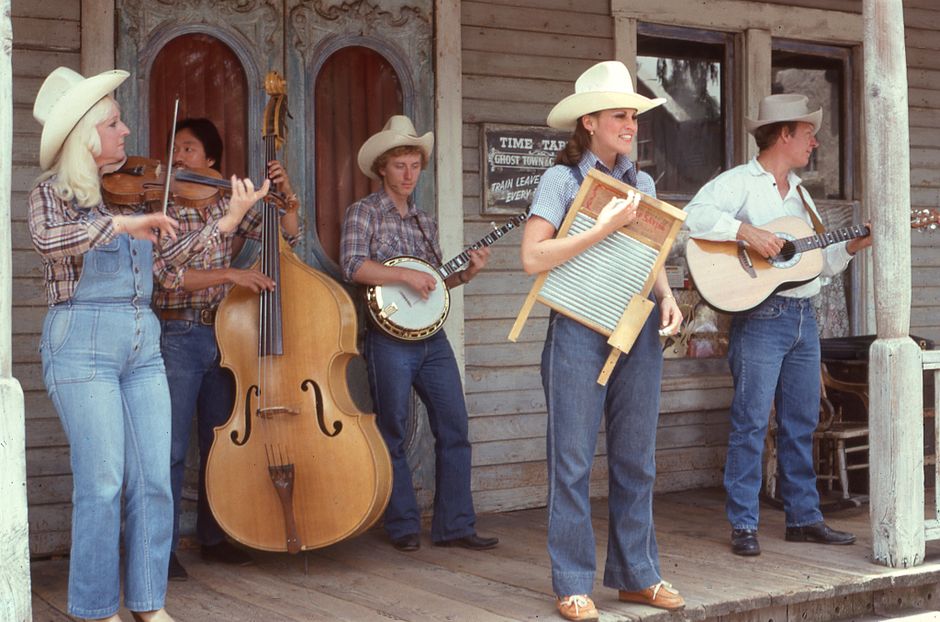
Photo by Malcolm Hill via Pexels
This category gathers instruments most closely associated with North American and European folk traditions, unified less by construction than by their shared role in community and informal music-making: songs around a table, a porch, or a festival stage rather than a concert hall. Each one is plucked or strummed by hand, with no bow involved, and most were designed from the outset to be approachable for people learning by ear rather than from formal training.
Within this family, construction varies widely. The ukulele and mandolin are small and fretted, built for quick chord changes and bright, cutting tone. The banjo trades a wooden soundboard for a stretched skin head, giving it a famously percussive attack, and carries a history that runs from West African instrument traditions through the difficult history of American minstrelsy to its central place in old-time and bluegrass music today — a history we try to address honestly rather than glossing over. The harp and autoharp take a different approach entirely, with strings running roughly perpendicular to a soundboard rather than along a fretted neck, and the dulcimer simplifies things further with a deliberately limited, diatonic fretboard that makes picking out a simple melody unusually approachable for a first-time player.
Several instruments in this category are frequently recommended as first instruments, and we try to explain specifically why: smaller size, lower string tension, simplified chord shapes, or a forgiving fretboard layout. At the same time, we are careful not to flatten real differences in difficulty into a single "easy" label, since what feels approachable depends heavily on a learner's hands, ear, and prior experience with any instrument at all.
These instruments also tend to travel well in groups, which is part of why they anchor so many folk ensembles: a mandolin, banjo, guitar, and upright bass can trade melody, rhythm, and bass lines fluidly in a way that a fixed orchestral seating chart does not easily allow. We explore that ensemble flexibility in more depth in our History and Ensembles category.
The five articles here cover ukulele sizes and tunings, how the mandolin achieves its distinctive sound, the different banjo types and the traditions they belong to, how pedal and lever harps work, and the two main dulcimer-playing approaches. Each links to the relevant profile pages in our library for full specifications.