
World Traditions
Balalaika
The balalaika is immediately recognizable by its triangular body and flat soundboard. The most common size, the prima balalaika, is tuned with two strings in unison and a third a fourth higher, a distinctive pattern that supports its characteristic rapid tremolo strumming technique.
StrummedPlucked
Russia
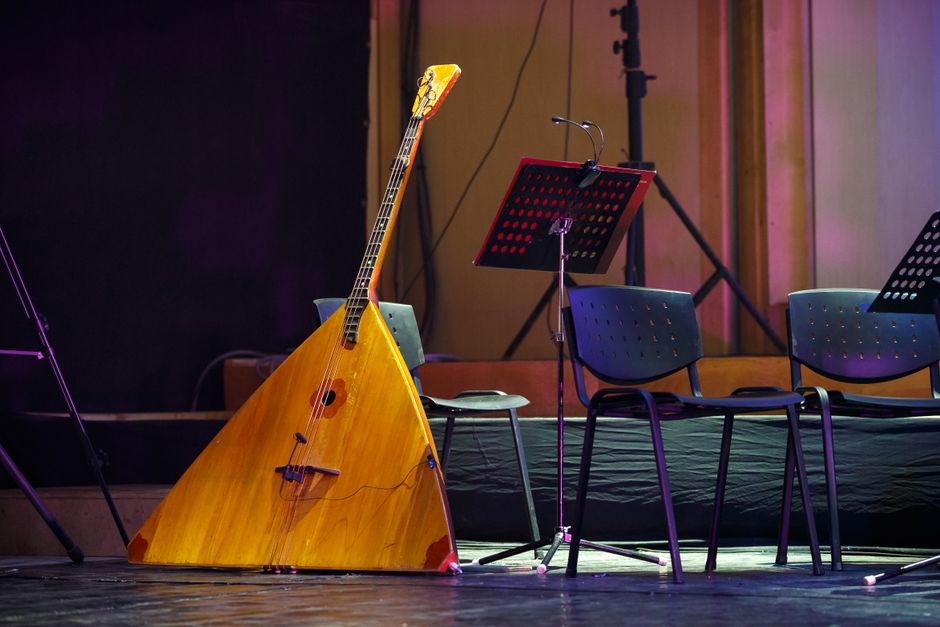
Photo by Gigxels com via Pexels
| Family | World Traditions |
|---|---|
| Region / context | Russia |
| Playing method | Plucked or strummed, often with rapid tremolo |
| Number of strings | 3 strings on the prima balalaika (larger family members, including sekunda, alto, and bass balalaikas, also exist) |
| Common tuning | Prima balalaika commonly tuned E4-E4-A4, with two strings in unison and the third a perfect fourth higher |
| String material | Nylon or steel, depending on the size and maker |
| Construction | Distinctive triangular body with a flat soundboard |
| Size range | The prima is small and light; larger family members, especially the bass balalaika, are considerably larger |
| Portability | Very portable — The prima balalaika is light and easy to carry; bass balalaikas are far larger and much less portable. |
| Acoustic volume | Moderate — Bright, with good projection for an instrument of its size, especially during tremolo passages. |
| Musical contexts | Central to Russian folk music and balalaika orchestras, with some classical crossover repertoire. |
| Beginner learning curve | Moderate — The unusual two-unison-plus-fourth tuning and tremolo technique add a learning curve beyond basic strumming. |
| Maintenance | Routine tuning and restringing; larger family members need more careful transport and storage. |
| Amplification | Acoustic by design; pickups are used in some amplified folk ensembles. |
| Practice environments | The prima size is comfortable for most home practice settings. |
Origin and Background
The balalaika's familiar triangular-bodied form was standardized in the late 19th century, largely through Vasily Andreyev's efforts to formalize a family of folk-orchestra instruments.
Sources
- Grove Music Online
- Smithsonian Institution, National Museum of American History
Content last checked against our reference sources on October 14, 2026. See our sources and methodology page for how we research instrument profiles.