
World Traditions
Charango
The charango is a small, guitar-like instrument strummed in Andean folk traditions, strung with ten strings in five paired courses using a reentrant tuning. It was traditionally built using an armadillo shell, though wood-bodied versions are increasingly common today, partly reflecting conservation concerns around the animal.
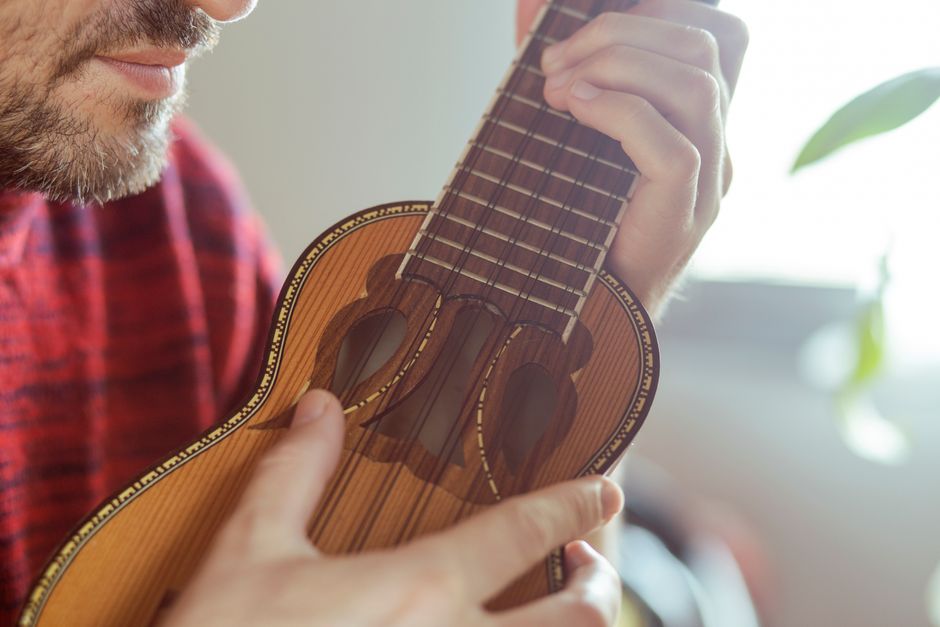
Photo by Jorge Alcojor via Pexels
| Family | World Traditions |
|---|---|
| Region / context | Andean South America |
| Playing method | Strummed, with a playing posture similar to a small guitar |
| Number of strings | 10 strings in 5 paired courses |
| Common tuning | A widely used reentrant open tuning is often described as G-C-E-A-E, with one course doubled at the octave; precise patterns vary somewhat by region |
| String material | Nylon or steel, depending on the maker and tradition |
| Construction | Traditionally built from an armadillo shell (quirquincho); wood-bodied versions are common today, increasingly favored for conservation reasons |
| Size range | Small, similar in scale to a ukulele or small guitar |
| Portability | Very portable — Small and light, easy to travel with. |
| Acoustic volume | Moderate — Bright for its size, audible in small ensemble settings. |
| Musical contexts | Central to Andean folk traditions such as huayno, and widely used in contemporary Andean and Latin American folk ensembles. |
| Beginner learning curve | Moderate — The reentrant, paired-course tuning takes some adjustment for players coming from standard guitar tuning habits. |
| Maintenance | Routine tuning and restringing; wood-bodied versions need similar humidity care to other small wooden instruments. |
| Amplification | Acoustic by design; pickups are used in some amplified folk ensembles. |
| Practice environments | Quiet enough for most home practice settings. |
Origin and Background
The charango developed in the Andean regions of present-day Bolivia, Peru, Chile, and Argentina after European stringed instruments arrived during 16th-century Spanish colonization and were adapted locally using regional materials and tunings.
Sources
- Grove Music Online
- Smithsonian Institution, National Museum of American History
Content last checked against our reference sources on October 14, 2026. See our sources and methodology page for how we research instrument profiles.