
World Traditions
Sitar
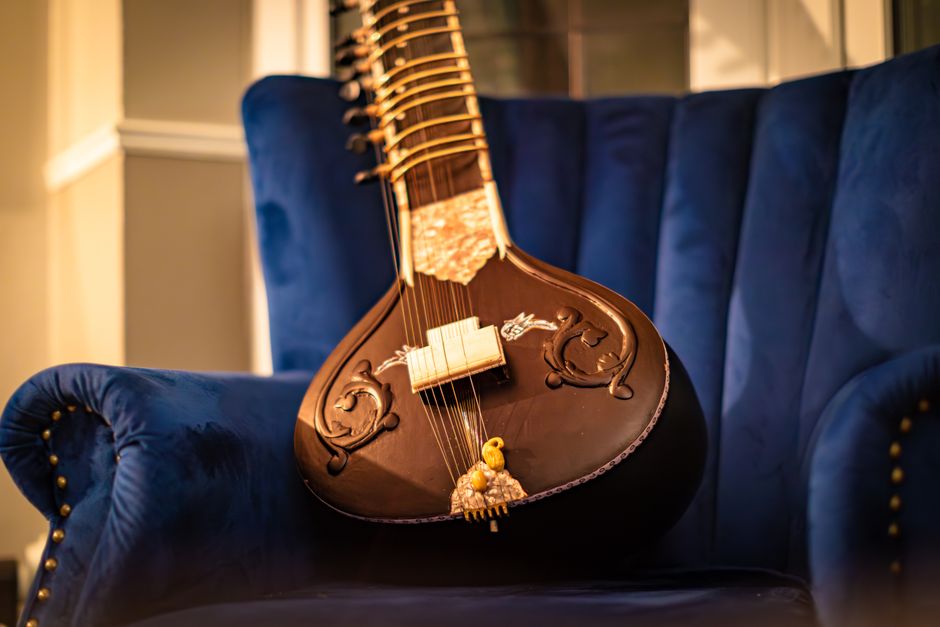
The sitar is built with a large gourd resonator, a long hollow neck, and movable curved metal frets that can be repositioned for different ragas, the melodic frameworks that shape Hindustani classical performance. Beneath the main playing strings, a set of sympathetic strings resonates without being directly plucked, giving the instrument its distinctive shimmering, buzzing tone.
| Family | World Traditions |
|---|---|
| Region / context | North India |
| Playing method | Plucked with a wire plectrum (mizrab) worn on the index finger, with extensive use of bent notes (meend) achieved by pulling the string sideways |
| Number of strings | Around 18 to 21 strings total, combining melody strings, drone strings, and roughly 11 to 13 sympathetic strings |
| Common tuning | Set according to the raga being performed rather than one fixed tuning |
| String material | Steel and bronze |
| Construction | Large gourd resonator, long hollow neck, and movable metal frets; a distinctive buzzing resonance comes from the bridge design (jawari) |
| Size range | Large, long-necked instrument |
| Portability | Low — The gourd body is relatively fragile and the instrument is long, making it one of the less portable instruments in this library. |
| Acoustic volume | Moderate — Distinctive buzzing resonance from the sympathetic strings and bridge, moderate in raw volume but rich in overtones. |
| Musical contexts | Central to Hindustani (North Indian) classical music in both solo and accompanied performance. |
| Beginner learning curve | Demanding — The sympathetic strings, movable frets, and raga-based approach to tuning and melody require years of dedicated study; it is not generally regarded as a casual first instrument. |
| Maintenance | Frequent tuning across many strings, periodic adjustment of movable frets, and careful handling of the gourd body. |
| Amplification | Acoustic by design; microphones or pickups are used for amplified performance. |
| Practice environments | Its moderate volume and resonance suit a dedicated quiet practice space. |
Origin and Background
The sitar developed over centuries within Hindustani (North Indian) classical music, with instrument makers during and after the Mughal era shaping it toward the form widely recognized today by the 18th and 19th centuries.
Sources
- Grove Music Online
- The Metropolitan Museum of Art, Department of Musical Instruments
Content last checked against our reference sources on October 14, 2026. See our sources and methodology page for how we research instrument profiles.