
Bowed Strings
Cello
The cello is a large bowed string instrument played seated, resting on an adjustable endpin and held between the knees. Its range sits roughly an octave below the viola, giving it both a warm melodic voice and a strong harmonic foundation, and it appears as a solo, chamber, and orchestral instrument across a wide range of musical styles.
Bowed
Northern Italy
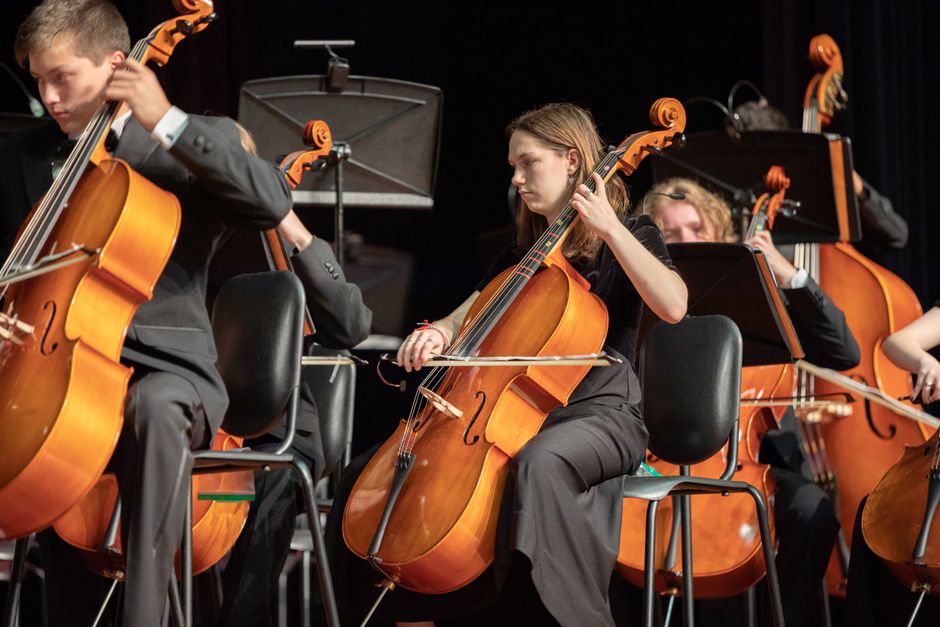
Photo by Roxanne Minnish via Pexels
| Family | Bowed Strings |
|---|---|
| Region / context | Northern Italy |
| Playing method | Bowed, played seated with the body resting between the knees and an endpin touching the floor |
| Number of strings | 4 strings |
| Common tuning | C2-G2-D3-A3 (low to high), one octave below the viola |
| String material | Steel or synthetic-core strings with metal winding on the lower strings |
| Construction | Large arched body similar in shape to a violin, with an endpin and a longer neck |
| Size range | Full-size body length around 75-76 cm; fractional sizes exist for younger players |
| Portability | Moderate — Requires a hard case for travel and is noticeably less convenient to transport than a violin or viola. |
| Acoustic volume | Moderate-Loud — Warm and resonant, especially in its lower register, with solid projection in ensemble settings. |
| Musical contexts | Core to orchestral and chamber repertoire, with a growing presence in folk and popular crossover projects. |
| Beginner learning curve | Moderate-Demanding — The seated posture and endpin setup differ from violin and viola technique, and like other bowed strings it requires separate development of bow control and left-hand pitch. |
| Maintenance | Bow rehairing, string changes, endpin and bridge checks, and humidity control for the larger wooden body. |
| Amplification | Acoustic by design; pickups and electric cellos are available for amplified performance. |
| Practice environments | Its size and resonance make it one of the more noticeable instruments to practice in shared housing. |
Origin and Background
The cello emerged in 16th-century Italy alongside the rest of the violin family and was gradually standardized into its modern form and role through the Baroque period.
Sources
- The Metropolitan Museum of Art, Department of Musical Instruments
- Grove Music Online
Content last checked against our reference sources on October 14, 2026. See our sources and methodology page for how we research instrument profiles.